
honest comparison
3d printed vs store-bought rc cars
The short answer: they're different products for different people. Here's where a printed chassis genuinely competes, where it doesn't, and why building one changes how you think about both.
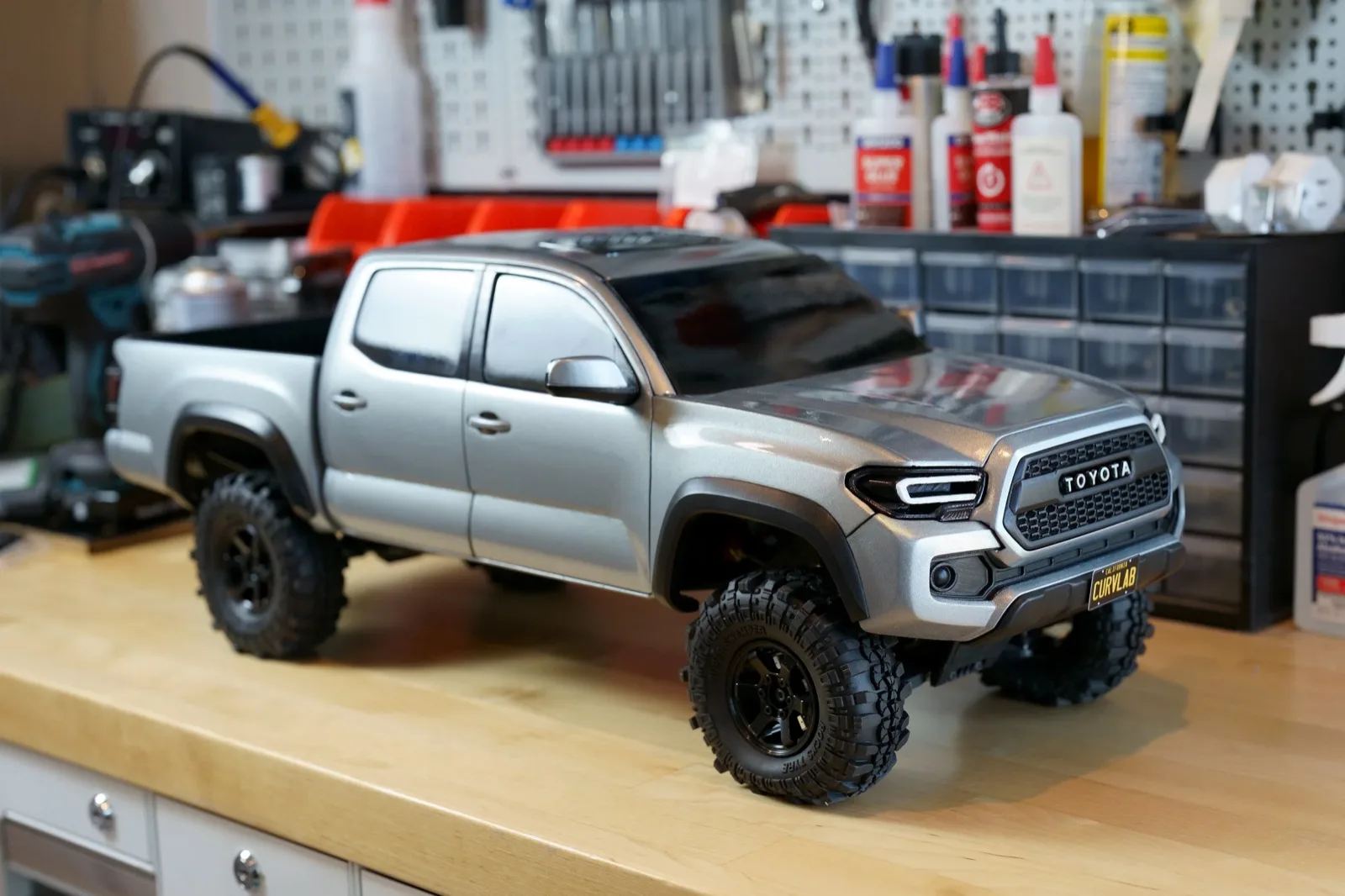
what you're actually comparing
A ready-to-run (RTR) car is a finished product: open the box, charge the battery, drive. A 3D printed RC car is a design you manufacture yourself. One is a purchase; the other is a project. Comparing them on price alone misses the point on both sides.
performance
A well-engineered printed chassis with proper electronics drives like a high-end RC car, not a toy — that's the design target, and it's achievable because the parts that matter most for performance (motor, ESC, servo, bearings, tires) are the same off-the-shelf components hobby-grade cars use. The printed structure has to be engineered around its material: geometry does the work that injection-molded nylon does in an RTR. That's exactly the kind of problem worth engineering.
Where an RTR still wins: out-of-the-box durability headroom. A production car has been through crash testing you can't replicate at home. A printed car catches up through iteration — every break tells you where the next version gets stronger.
cost
Files run free to $35; the hardware for a complete chassis build lands around $600. A comparable hobby-grade RTR sits in a similar range. So a printed build is rarely cheaper up front — the economics flip after the first crash. A replacement printed part costs grams of filament and printer time. Replacement RTR parts cost real money, shipping time, and are sometimes discontinued.
repairability and ownership
This is the printed car's unfair advantage. Every structural part of the car exists as a file on your computer. Break a steering lever on Sunday morning, print another by Sunday afternoon. Want more steering angle, a stiffer mount, a different color? Modify, print, test. You own the means of production for your own spare parts.
the build itself
For a lot of people the building is the point — the same reason kit cars and model engines exist. You come out the other side understanding every fastener in the car, which makes you better at tuning it, fixing it, and eventually designing your own parts. If you just want to drive today, buy an RTR. If you want to understand the machine, build one.
where to start
Read how to build a 3D printed RC car for the full path, check what printer you need, or go straight to the WR1 — a fully printable AWD rally chassis.